 Prayer for many people is a stumbling block in life. We pray when we gather as a community for the Eucharist, for popular communal prayers such as the rosary. But when it comes to our personal experiences of prayer we are often dissatisfied or too busy. We fill silences with words and are often lost is the realm of ‘listen Lord your servant is speaking!’ I say we, but I guess it would be more honest to say ‘I’. I have problems with prayer. I know the theory, I have been formed in an ancient spiritual tradition and, thankfully, I have had deep experiences of God’s presence and comfort in times of prayer. But these are the heights, but what of the routine? How can prayer become real and life changing for each of us? A more important question – What of the times in my prayer life when it seems that God does not hear or is apparently disinterested in my plight? As I reflect on my own prayer life, I hope that you will find some echoes with your own experiences.
1. Why pray.
If we want to know why we must pray, the simple answer is the example of Jesus and the radical and passionate relationship he enjoys with his Father. It shapes every action and word that Jesus does or utters. In the Gospels we see how Jesus prays before major decisions, defining acts, and his ultimate sacrifice. These include calling disciples, healing the sick, raising the dead, proclaiming the inbreaking of the Kingdom of God and his death on the cross. Jesus depends totally on the love of his Father and he lives in the tension of this love and the world in which he lives. The ‘why’ of prayer is the response we make to the love that God lavishes upon us. As Christians, our relationship with God is the defining relationship of our lives, the relationship that makes all others possible and whole.
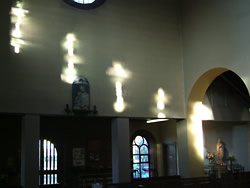 Why do I pray? Because I need to. If we wish to fully realise our humanity we have to allow God to be fruitful in our lives. This can only happen by being open to God’s gifts, to God’s invitation and to the opportunities that we are invited into.
2. Patterns of prayer.
The disciples witness the way Jesus prays. It is new to them, unrecognisable from what they know. They are used to the prayer of the synagogue and temple, the psalms and blessings that have shaped their days from their youth. The way Jesus prays is radical. They want to share in this, so they ask, ‘Lord teach us to pray.’
He was praying in a certain place, and when he had finished, one of his disciples said to him, "Lord, teach us to pray just as John taught his disciples."
He said to them, "When you pray, say: Father, hallowed be your name, your kingdom come. Give us each day our daily bread and forgive us our sins for we ourselves forgive everyone in debt to us, and do not subject us to the final test."
Luke 11:1-4.
2.1 Prayer as intimacy.
The relationship that Jesus embraces with his Father, 'Abba', is one of intense intimacy and passion. When asked by the disciples how to pray, Jesus begins radically - call God your Father. Jesus invites his followers into a personal relationship with the source of life. This is the lived experience of Jesus' prayer. He is in continuous dialogue with his Father. Jesus seeks out those moments of communion, he prays before every decisive action or word. The time he spends in Gethsemane continues the ongoing dialogue between Father and Son.
So prayer is relationship. Like all relationships it needs nurturing, time, space and openness. Often we think that prayer is about words, but the communication of relationship is more often beyond words and more about presence. Being in the same space as the one we love, simply enjoying that silent and profound communication that exists between lovers.
2.2 Prayer - the praise of God.
Jesus calls us to praise of God. ‘may your name be Holy.’ Our response to God’s love calls us to an appreciation of who God is in our lives. When we are in the presence of those we love we are often joyful in their presence, bubbling over with enthusiasm. Praise is also thoughtful. Adoration is praise. Consciously being present to God in silence is praise and often communicates far more than words.
2.3 Prayer – building blocks of the Kingdom.
Prayer is also about commitment. In prayer we commit ourselves to God’s will, knowing that God’s desire for us is our good and the realisation of our full potential. Prayer also equalises us in a world that is far from fair. We pray for the justice that God’s Kingdom brings. In this Kingdom all hungers are satisfied, all have their daily bread, all are free to be who they are called to be. Prayer is the acknowledgement that I have something to do in bringing this desire of God into being.
2.4 Prayer - learning to live with one another.
For me Jesus highlights basic and deep human needs in his prayer. We pray for our daily bread. That we might receive daily, what we need to live. I think that this is a beautiful insight into our world. The word satisfaction comes from the Latin ‘satis’ meaning ‘enough’. If our hungers are satisfied we have enough. If I take more, then my brother or sister will be left hungry, unsatisfied. In praying for my daily bread, I pray that all hungers may be satisfied, we pray that all have enough to flourish. We pray as stewards of creation, of all that God has given us.
Then the difficult part. We pray that we might learn forgiveness, and be forgiving, so that we might know forgiveness. This is the line I find hard to utter. It is easy for me to ask God for forgiveness. But Jesus tells us to forgive as we would like to be forgiven. Hoe we forgive, the quality of our mercy, is how we will be forgiven. Mercy is to be something we live if our relationship with God is to be authentic.
Jesus reminds us that temptation is always near. He warns us to pray that we might not give in to temptation but to live as children of God.
Amen. So let it be!
Pitfalls, heartbreak and stumbling.
So that’s the theory, but what of the experience? Joseph Chalmers, the Prior General of the Carmelite Order reflects that the problem of prayer is often shaped by our own expectations. In a real way we limit God by thinking small.
“Friendship can never be forced. We have the awesome power of putting limits on God. When we think of God we should think BIG. God wants to do so much more for us than we could ever ask for or even imagine. So how can we respond to this invitation? We can learn from the way we relate to people. There are people we meet only rarely and never think much about them. We can hardly call them friends. Then there are people with whom we are quite friendly but who do not really impinge on our lives. Then there are others who really know us and love and accept us for what we are. These are our friends. How do we relate to them? Do we always batter their eardrums with words or are we also prepared to listen to them? We have two ears and one mouth, so we should listen twice as much as we speak.”
Another pitfall in our prayer is our sense of unworthiness. The ‘why would God want to listen to me anyway?’ attitude to life. Again we limit God with this attitude. That ‘we’ is creeping in again. I mean ‘I’. If we accept that we are invited into relationship with God, why do we not believe that he wants to hear us, be with us, love us! It is almost as if I believe in God, but I don’t think God believes in me. The head tells us that this is rubbish, but it is a lie we often believe.
The great saints – the spiritual greats of our Church have often struggled with prayer. Prayer for many of us begins with great clarity and joy. God is near and his presence is felt, then comes that long period of aridity and apparent absence. It is as if God is disinterested. I find comfort in these saints. Their names tumble from our lips, Teresa of Avila, Therese of the Child Jesus, Blessed Teresa of Calcutta, but there was for them great times of doubt that God heard their prayer. The thing that made them saints is that they never stopped praying! Prayer was relentless, tenacious and above all, heart breakingly honest.
“God, please forgive me, when I try to raise my thoughs to heaven, there is such convicting emptiness that those very thoughts return like sharp knives and hurt my very soul. I am told God loves me, and yet the reality of darkness and coldness and emptiness is so great that nothing touches my soul. Did I make a mistake in surrendering blindly to the call of the Sacred Heart?
Mother Teresa
Why I pray.
As a priest I am called to prayer. To pray for the world, especially the community that I serve, and to lead others in prayer is at the heart of my vocation. Inspite of this, I pray not out of obligation but out of necessity. I know the person that I am when I don’t pray and that person is unfulfilled, without focus and selfish. Prayer is at the heart of who I am, because my relationship with God shapes my appreciation of all my other relationships. I need to find the time in each day, beyond what is expected of me, to be in God’s presence in a conscious and tangible way. My way of prayer is personal, as indeed it should be. Space and environment are important. I need to find a space apart from distraction, where I am comfortable and able to be still. The rest is simply wasting time with the God who loves me, finding a language to express what is happening, how I am responding, how I am living the Gospel. They need to be my words. As a husband or a wife has to use their own words to communicate their feelings to one another, borrowed words are only sufficient for a while. Then I have to develop my own thoughts and words The struggle continues, but I believe it will be fruitful in God’s good time.
Most of these are anonymous but I have found them helpful in moving my prayer on over the years.
Here I am Lord
And the Lord said: GO. And I said: Who, me? And he said: Yes, you. And I said: But I'm not ready yet, and there is company coming. And I can't leave my family. You know that there is no to take my place. And he said: You're stalling.
And the Lord said: GO. I said: But I don't want to. And he said: I didn't ask if you wanted to. And I said: Listen, I'm not the kind of person to get involved in arguments. Besides, my family won't like it. And what will the neighbours think? And he said: Rubbish!
And yet a third time the Lord said: GO. And I said: Do I have to? And he said: Do you love me? And I said: Look I'm scared. People are going to hate me and cut me into little pieces. And I can't take it all by myself. And he said: Where do think I'll be?
And the Lord said: GO. And I sighed: Here I am - send me. Amen.
- Anon.
Prayer of the Soul taken in love
Mine are the heavens
and mine is the earth.
Mine are the nations,
the just are mine and mine the sinners.
The angels are mine,
and the Mother of God, and all things are mine;
and God himself is mine and for me,
because Christ is mine and all for me.
What do you ask, then, and seek, my soul?
Yours is all of this, and all is for you.
Do not engage yourself in something less,
nor pay heed to the crumbs which fall from your Father's table.
Go forth and exult in your Glory!
Hide yourself in It and rejoice,
and you will obtain the deepest desires of your heart.
St John of the Cross.
The Priest ~ A Prayer on a Sunday Night
People ask a great deal of their priest, and they are right. But they should understand that it is not easy to be a priest. He has given himself in all the ardour of youth, yet he still remains a man, and every day the man in him tries to take back what he has surrendered. It is a continual struggle to remain completely at the service of Christ and others.
A priest needs no praise or embarrassing gifts; what he needs is that those committed to his charge should, by loving their fellows more and more, prove to him that he has not given his life in vain. And as he remains a man, he may need once in a while a delicate gesture of disinterested friendship … some Sunday night when he is alone.
Come with me, and I will make you fishers of men. (Mark 1:17)
You did not choose me: but I chose you. I appointed you to go on and bear fruit that shall last. (John 15: 16)
Forgetting what is behind me, and reaching out for that which lies ahead, I press towards the goal to win the prize which is God’s cal to the life above in Christ Jesus. (Phil 3: 13-14)
Tonight, Lord, I am alone.
Little by little the sounds died down in the church,
the people went away,
and I came home, alone.
I passed people who were returning from a walk.
I went by the cinema that was disgorging its crowd.
I skirted café terraces where tired strollers were trying to prolong
the pleasure of a Sunday holiday.
I bumped into youngsters playing on the footpath,
youngsters, Lord, other people’s youngsters who will never be my own.
Here I am, Lord, alone.
The silence troubles me,
the solitude oppresses me.
Lord, I am 35 years old,
a body made like others, ready for work,
a heart meant for love,
but I’ve given you all.
It’s true, of course, that you needed it.
I’ve given you all, but it’s hard, Lord.
It’s hard to give one’s body; it would like to give itself to others.
It’s hard to love everyone and claim no one.
It’s hard to shake a hand and not to want to retain it.
It’s hard to inspire affection, to give it to you.
It’s hard to be nothing to oneself in order to be everything to others.
It’s hard to be like others, among others, and to be of them.
It’s hard always to give without trying to receive.
It’s hard to seek out others and to be unsought oneself.
It’s hard to suffer from the sins of others, and yet be obliged to hear and bear them.
It’s hard to be told secrets, and be unable to share them.
It’s hard to carry others and never, even for a moment, be carried.
It’s hard to sustain the feeble and never be able to lean on one who is strong.
It’s hard to be alone,
alone before everyone,
alone before the world,
alone before suffering, death, sin.
Son, you are not alone,
I am with you, I am you.
For I needed another human vehicle to continue my Incarnation and my Redemption.
Out of all eternity, I chose you, I need you.
I need your hands to continue to bless,
I need your lips to continue to speak,
I need your body to continue to suffer,
I need your heart to continue to love,
I need you to continue to save,
Stay with me, son.
Here I am, Lord;
Here is my body,
Here is my heart,
Here is my soul.
Grant that I may be big enough to reach the world,
Strong enough to carry it,
Pure enough to embrace it without wanting to keep it.
Grant that I may be a meeting place, but a temporary one,
A road that does not end in itself,
because everything to be gathered there,
everything human, leads towards you.
Lord, tonight, while all is still and I fell sharply the sting of solitude,
While men devour my soul and I feel incapable of satisfying their hunger,
While the whole world presses on my shoulders with all its misery and sin,
I repeat to you my “yes”- not in a burst of laughter,
but slowly, clearly, humbly,
Alone, Lord, before you,
in the peace of the evening
Pere Michel Quoist